
Thai Nguyen (formerly Bac Kan) – Highland Women Access the Digital Economy
The article reports on activities supported by projects funded by Bread for the World and implemented by DWC in the former project areas of Bach Thong and Ngan Son districts of Bac Kan Province, which are now Phu Thong, Cam Giang, Phong Quang, Coc Dan, Bang Van, and Thuong Quan communes of Thai Nguyen Province.
The news was published by Thai Nguyen Newspaper and can be accessed via the link provided here (Vietnamese only, English below).
A feature report on the same topic was produced and broadcast by Thai Nguyen Radio and Television, available via the link provided here (in Vietnamese only). The version with English subtitles can be found at the following link.
The digital economy is creating new development opportunities for people across all regions. In the mountainous areas of the province, the application of technology in production, promotion, and product consumption has gradually become familiar, especially among ethnic minority women. From simple tasks such as using smartphones and livestreaming to sell products, to participating in e‑commerce platforms, highland people are steadily keeping pace with digital transformation.
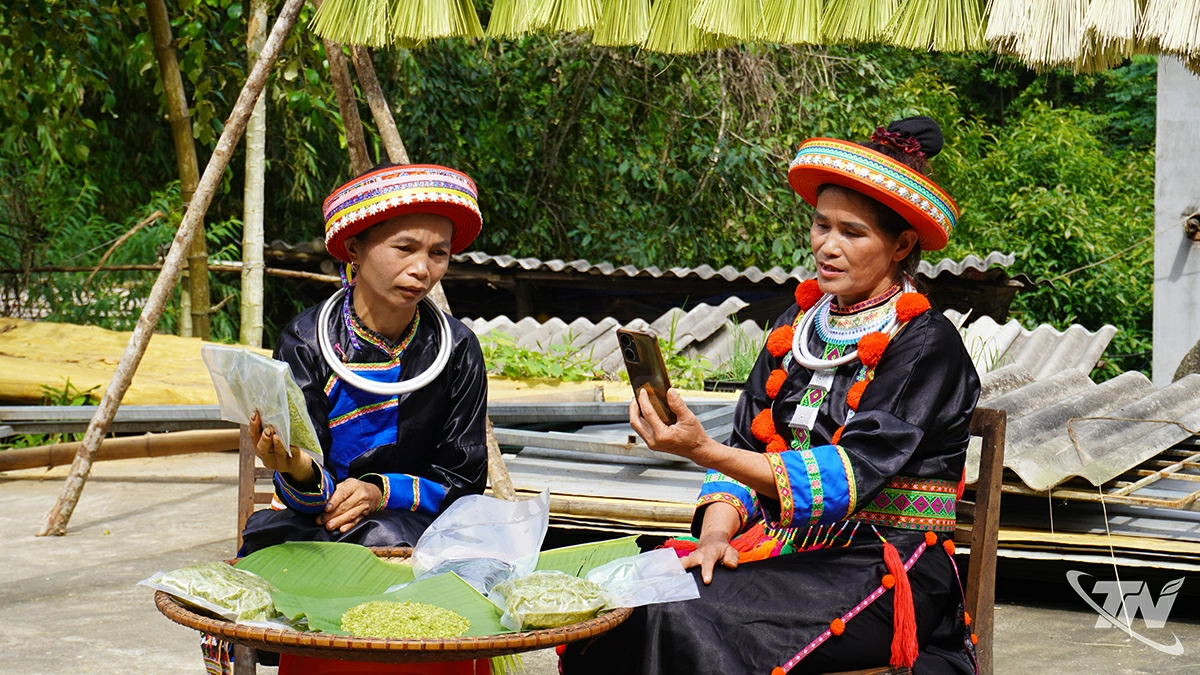
Mrs. Dang Thi Thai, from Thuy Dien village (Phu Thong Commune), livestreams to introduce her family’s cốm products.
After finishing a new batch of cốm, Mrs. Dang Thi Thai from Thuy Dien village (Phu Thong Commune) takes out her phone to livestream and introduce the product. In the past, selling on social media was completely unfamiliar to her. After some initial hesitation, she has become comfortable recording videos, responding to comments, and taking photos to post online. “In the past, after making cốm, I only sold it within the commune. Now I livestream and post online, and customers place orders every time I upload something,” Mrs. Thai shared.
Digital‑economy access in highland areas is not limited to small farmer groups but has expanded to the cooperative level.
Thien An Cooperative in Phu Thong Commune, led by Ms. Ly Thi Quyen, a Dao ethnic woman, is a typical example of how highland communities are embracing the digital economy. From its establishment, the cooperative prioritized bringing its products online and promoting them on e‑commerce platforms to reach customers more quickly. Dao herbal bath products, herbal pillows, scented sachets, and traditional clothing are now shipped to many provinces and cities through online orders.
Ms. Ly Thi Quyen shared: “Technology helps us reach customers more easily, and our sales performance has improved. This motivates the cooperative to focus on enhancing product quality and increasing labor productivity.”
In Ngan Son Commune, Ms. Nong Thi Dap from Hop Tien village is also becoming familiar with online business. Having had little exposure to technology, she used to struggle with using a smartphone. With guidance from her children and grandchildren, she has learned how to take photos, write descriptions, and post Khau Nua Lech Cốm, a local specialty, for online sale.
Ms. Nong Thi Dap shared: “At first, I faced many difficulties, but thanks to persistent learning, I can now post by myself. Selling online helps our cốm reach many customers from far away.”
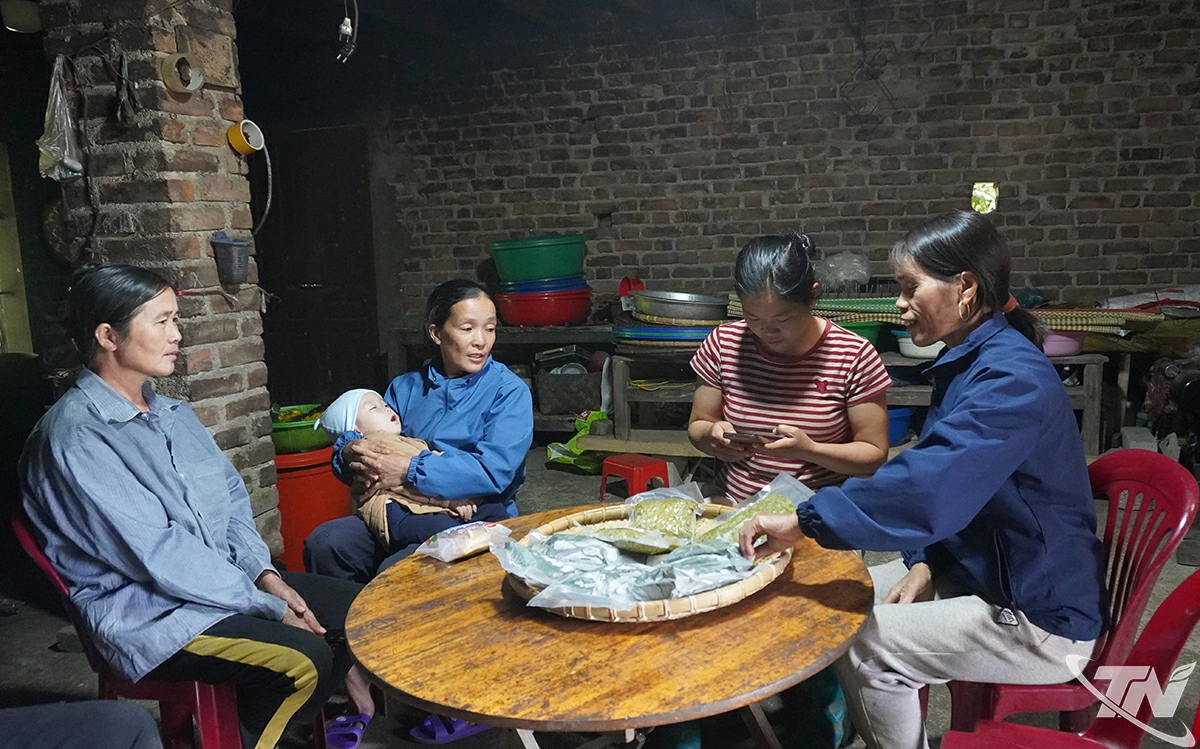
Ms. Nong Thi Dap in Ngan Son Commune takes photos of her cốm products to post on social media.
The changes in mindset and practices among highland women stem from their own initiative as well as the effectiveness of the Project “Improving the Livelihoods for Poor Communities” funded by Bread for the World.
Through the Project, local people of Phu Thong and Ngan Son communes have received machinery for cốm production; training in online sales skills; guidance on filming videos, photographing products, writing promotional content, reaching customers via social media, and designing labels, packaging, and product traceability. As a result, many ethnic minority women have confidently expanded their businesses, explored new markets, and increased their income.
Project officer Bui Van Thang shared: “With machinery and promotional skills, products are no longer confined to the local area. Highland women have become more confident, seeing smartphones and social media as economic tools.”
Information technology is helping improve living standards and shaping a new production mindset based on initiative, creativity, and broad connectivity. Each post, each livestream session, and each order shipped out reflects the transformation taking place among highland communities as they embrace the digital economy.