
Thai Nguyen (formerly Bac Kan) – A Turning Point for the Cốm Production
From fragrant upland sticky rice grains, through the skillful hands of highland farmers, batches of green Cốm have nourished generations and become a familiar local delicacy. To ensure both quality and sufficient supply for the market, it is essential to acknowledge the support provided by the Project “Improving the Livelihoods for Poor Communities, continuation” and Project “Development through Participation and Ownership, continuation” funded by Bread for the World and implemented by the Center for Promoting Development for Women and Children in what are now Phu Thong commune, Ngan Son commune and Bang Van commune.
The article was reported by Thai Nguyen Newspaper, which can be found at the following link (Vietnamese only).
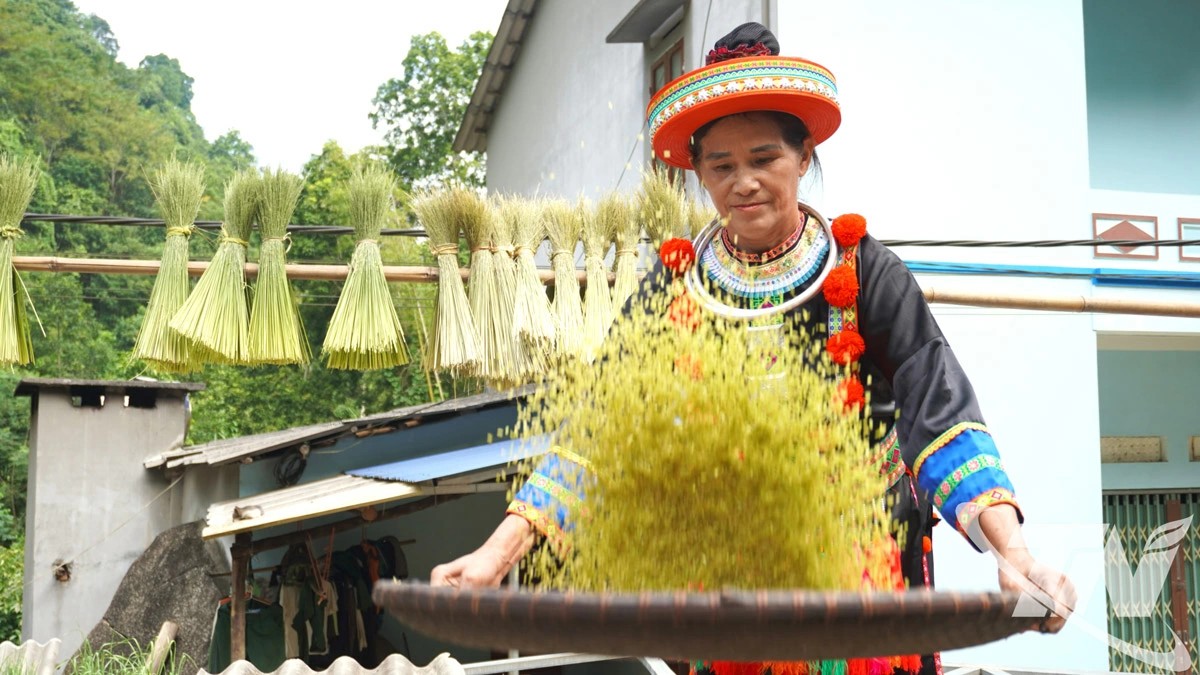
Local Cốm becomes a marketable product.
In Phu Thong Commune, the project has supported four farmer groups specializing in cốm production with a total budget of 162 million VND, including pounding machines, centrifugal tumblers, vacuum sealers, and processing tools.
Mrs. Dang Thi Thai, a member of the cốm‑making group in Thuy Dien Village, shared: “In the past, each batch produced only a few kilograms and spoiled easily because the pounding was uneven. With the new equipment, the product is more elastic, greener, and more consistent, and our output has doubled or even tripled.”
Not only in Phu Thong, but in Bang Van and Ngan Son communes, four cốm‑making groups have also received synchronized machinery support. Many women are accessing a market‑oriented production process for the first time.
Ms. Nong Thi Dao, from Hop Tien 1 Village in Ngan Son Commune, said: “The project trained us in everything, from selecting raw materials, controlling temperature, roasting the cốm, to packaging and labeling. Thanks to that, we can calculate costs, produce consistent products, and ensure safety.”
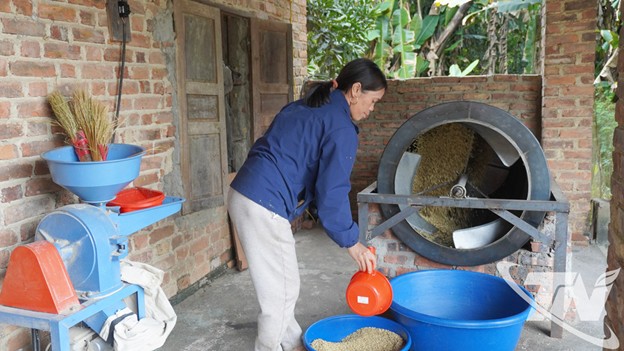
The project has provided machinery to the cốm‑making interest group in Hop Tien 1 Village, Ngan Son Commune.
In the past, cốm production was seasonal, small‑scale, and mainly served local households. Today, many women’s groups have proactively connected with markets, bringing their products into clean agricultural stores, trade fairs, OCOP display spaces, and local tourist routes. This transformation stems not only from modern equipment but also from a shift in the economic mindset of highland women.
As a result, they have begun working together to reduce costs, increase output, keep records and calculate profits, standardize production processes, unify selling prices, and actively seek markets instead of relying on middlemen.
The fragrant, sticky taste of cốm today comes not only from glutinous rice but also from the determination of highland women to take control of their livelihoods. From Phu Thong to Ngan Son and Bang Van, the cốm‑making models supported by the Projects are becoming bright examples in the journey toward building sustainable livelihoods for ethnic minority communities and nurturing aspirations for a more prosperous life.