
Thai Nguyen (formerly Bac Kan) – Keeping Pig Herds Healthy with Natural Probiotics
This bulletin covers activities conducted under the Project funded by Bread for the World, implemented in Pac Nam and Ngan Son districts of the former Bac Kan province, specifically in the communes of Cao Minh, Bang Thanh, Thuong An, Bang Van, and Ngan Son, now part of Thai Nguyen province.
The article was published in the Economics section (page 7), Issue No. 138 of Thai Nguyen Newspaper, available at the link here (Vietnamese only).
A video news was also aired on this matter; it can be found in this link (Vietnamese only), the version with English subtitles can be found in this following link.
African swine fever causes considerable losses to livestock farmers every year. However, in the northern localities of the province, some households have adopted organic pig-raising practices, using native microorganisms to ferment feed, which helps keep their herds healthy and growing steadily.
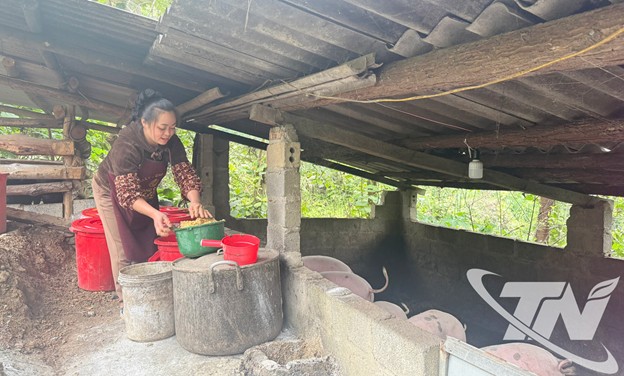
Ms. Trieu Thi Mai, from Vi Ba Village in Bang Van Commune, uses a pig-raising method based on feed fermented with natural probiotics.
In Vi Ba Village, Bang Van Commune, Ms. Trieu Thi Mai continues to raise dozens of pigs to support her family’s livelihood. In previous years, whenever disease outbreaks occurred, she was always worried about the high risk of infection. However, since she began using locally produced probiotics to ferment pig feed, her herd has remained healthy, contracted fewer diseases, eaten well, and grown quickly. Ms. Mai shared: “Since I started using native probiotics, the pigs eat better and are healthier. Making the probiotics is simple, the ingredients are available locally, the cost is low, and the results are clear.”
The method of fermenting livestock feed using indigenous microorganisms has been supported by the organization Bread for the World and implemented by the Center for Promoting Development for Women and Children in several northern communes of the province, as part of the Livelihood Improvement Project for local communities.
The ingredients for making the probiotics are very simple, just humus soil, leftover cooked rice, corn flour, sea salt, and leaves. Once the fermentation is complete, the probiotics are mixed with chopped banana stems, ground corn, and other materials; after a few days, the feed can be given to the pigs. In addition to being easy to make and cost-effective, this method also provides clean feed and helps strengthen the animals’ natural immunity.
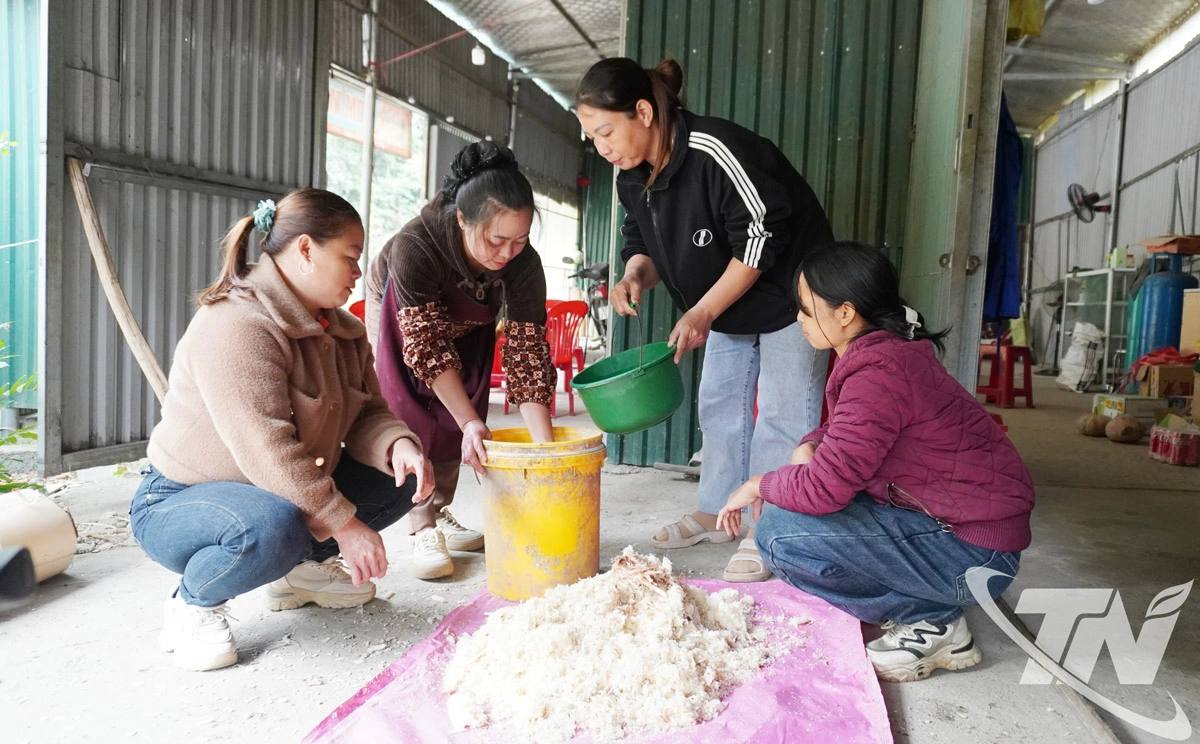
The farmer group in Vi Ba Village, Bang Van Commune, supports one another in using the natural probiotic fermentation method for livestock feed.
Ms. Ca Thi Danh, from Na Nghe Village in Bang Thanh Commune, shared: “Since applying the probiotic fermentation method for feed, my pigs have grown steadily and have not been affected by disease outbreaks. Thanks to this success, our implementation group and I have been sharing our experience with other livestock-raising households in the commune so they can apply the method as well.”
The model has now been expanded to many livestock-raising groups in Bang Van, Bang Thanh, Phu Thong, and other communes. With support from the Livelihood Improvement Project for local communities, livestock interest groups have been established, creating opportunities for local people to share experiences and support one another in production.
Ms. Chu Thi Lien, from Vi Ba Village in Bang Van Commune, said: “In the past, we were always very worried during disease season. Now, using feed fermented with probiotics keeps the pigs much healthier, and everyone in our livestock interest group is very happy.”
Using readily available natural ingredients, farmers have created their own feed to protect their pigs from disease outbreaks. With support from the Livelihood Improvement Project for local communities, the indigenous probiotic feed fermentation model not only brings practical economic benefits but also offers a sustainable approach, helping livestock farmers proactively adapt and grow safely under new conditions.